Website preview · Montessori Oaks
Previewing at
Montessori Oaks

Approach.

What Montessori looks like in practice, day by day, at Montessori Oaks.

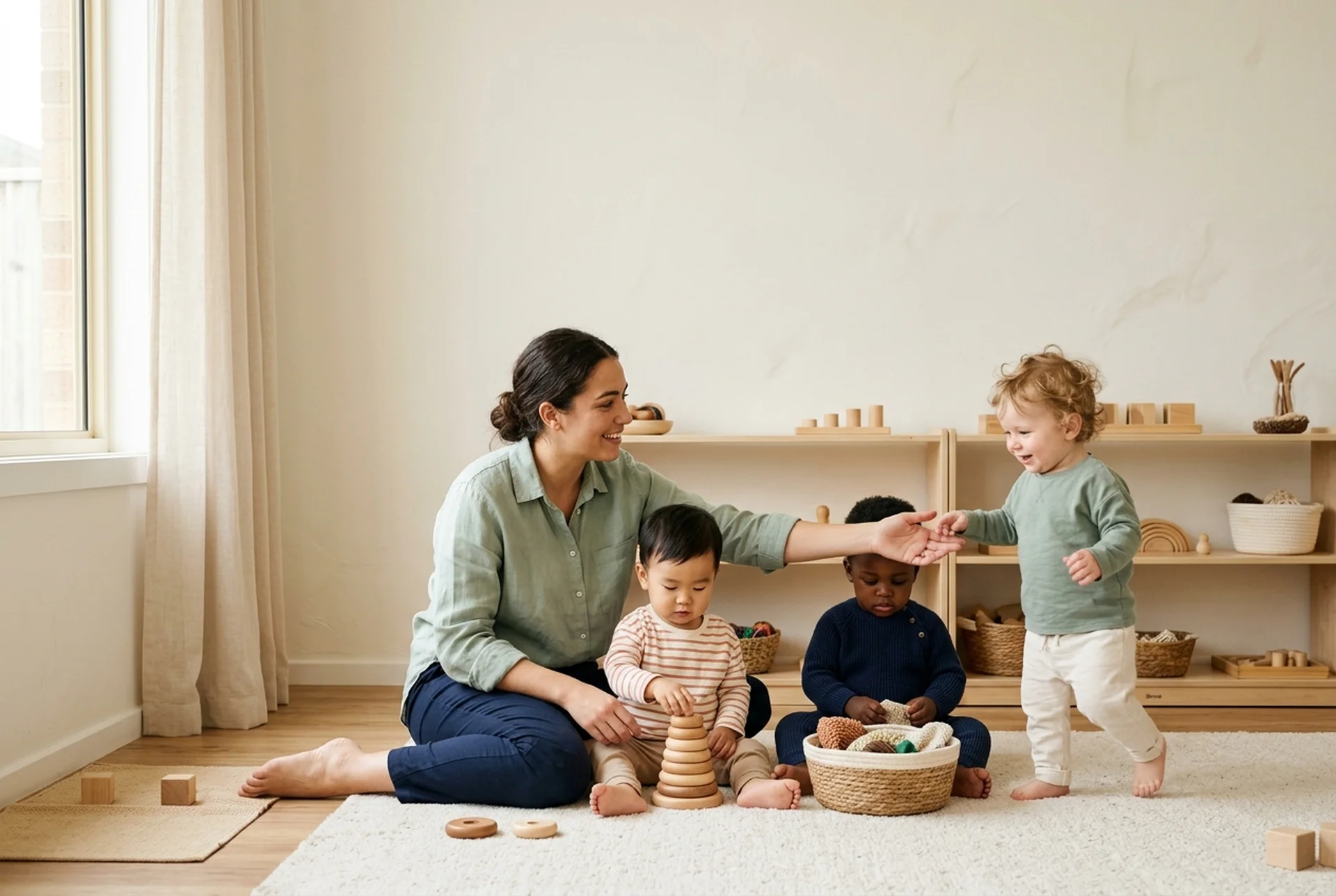
AI-generated illustrative image — Representative classroom scene of three young toddlers exploring with an educator nearby

Approach

The Montessori Approach

Montessori education rests on a simple idea: effective learning is self-directed, and it develops the whole person. Classrooms are purposefully designed around each child's developmental needs. Teachers are trained to observe closely and offer exactly what a child needs at that moment to learn. This prepares children for a fast-changing world.

We Follow the Child

Teachers study the specific developmental stages of the children they work with. That training lets them honor where each child is right now and shape the environment to suit it. Learning is not always linear. Each child needs different challenges and supports along the way. Montessori students also get real time to study personal interests deeply.

Montessori Fosters Independence

Infants, toddlers, and young children learn that their independence is valued. They move freely, make choices within carefully crafted limits, and know their voices are heard. Older children begin learning time management. They also practice practical life skills like cleaning and preparing food, usable in the classroom, at home, and beyond. That independence builds real empowerment.

Beautiful Classrooms Inspire Beautiful Work

Step into a Montessori classroom and the difference is visible at once. Natural materials and natural lighting are valued. Living things, plants and animals, are present. Low shelves let children reach their own work. There are places to work in a group or alone, on the floor or in a chair. High-quality materials inspire beautiful work.

We Value Kindness and Peace

Montessori students are global citizens. World geography starts at a young age, and children learn about traditions from many cultures. Teachers take time to teach conflict resolution, helping children work through social dynamics as they arise. Peace and kindness are treated as the base of any quality education, and a foundation for human progress.

Nature is Integrated

Children help care for the plants and animals in their rooms, and classrooms often have a museum-like quality. Depending on what children are studying, you might find dissected owl pellets, ancient fossils, or sparkling geodes. Botany and zoology begin at the primary level. Students also go out into nature whenever possible to learn firsthand.

What this looks like in practice

At a Montessori school, children choose work from open shelves and stay with it as long as they need. Teachers observe rather than direct, stepping in with a lesson when a child is ready. Infants and toddlers move freely and make choices within limits. Older children manage their own time and practice practical skills. Records track each child's progress without grades or traditional tests.

The benefit shows up at home. A child who pours her own water, puts materials away, and settles into a task without being told is practicing independence. Because teachers follow the child rather than a fixed timetable, learning moves at the right pace. Children learn that their voice is heard, so they bring questions and ideas to family life too.

Questions? Ask us

Request a visit
MO
Hi! I'm Montessori
How can I help you today?
MO
Montessori Oaks Assistant
Ask about tours, programs, and enrollment.
Hi! I can help with Montessori Oaks questions.
Powered by EnrollIQ