
An aid to life, not just facts.
At Montessori Oaks, we see education as an aid to life, not just facts.
How we see children
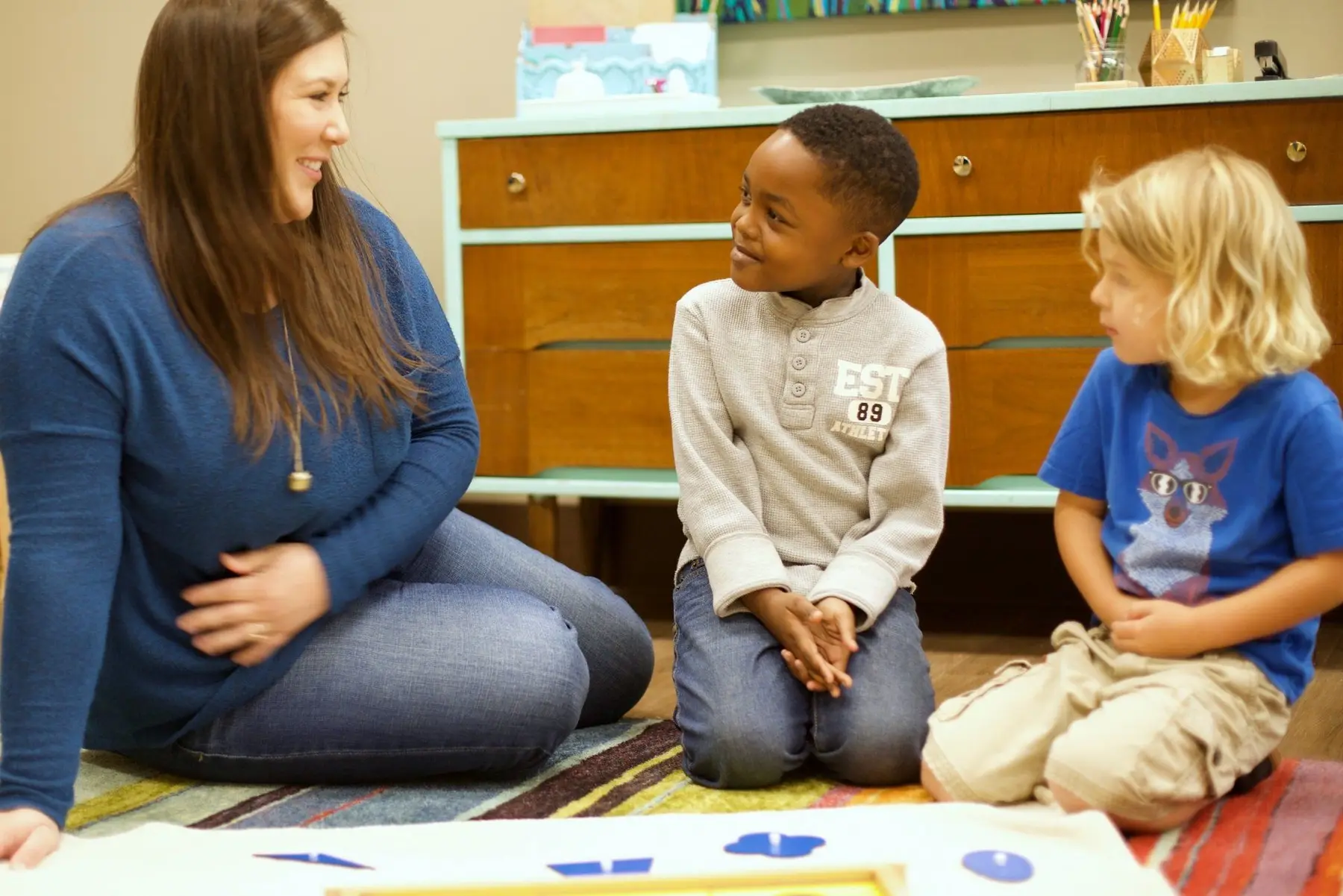
Montessori Oaks is a full-time, year-round school for children ages 6 weeks to 6 years. We focus on curiosity, independence, compassion, collaboration, and critical thinking. Education, in our view, is an aid to life rather than the transmission of academic facts. Montessori education has served families around the world for over a century. It endures because it mirrors real life and serves early development well.
In the rooms, you will see children choosing work and returning it to the shelf when they are done. A teacher might sit beside a child, not across from them, and wait. Lessons come in small groups or one to one. Spanish and music are part of the curriculum and arrive when a child is most ready for them. The morning work cycle is uninterrupted so attention has room to deepen.
We do not give grades or traditional tests, but we keep daily records of each child's progress. Families can ask to see those records. Our program holds a Four-Star rating from Texas Rising Star, the state's quality rating and improvement system. That rating reflects strong scores in teacher-child interaction, environment, staff qualifications, and administration. Certification lasts three years, with annual unannounced visits possible in between.
What you notice in practice
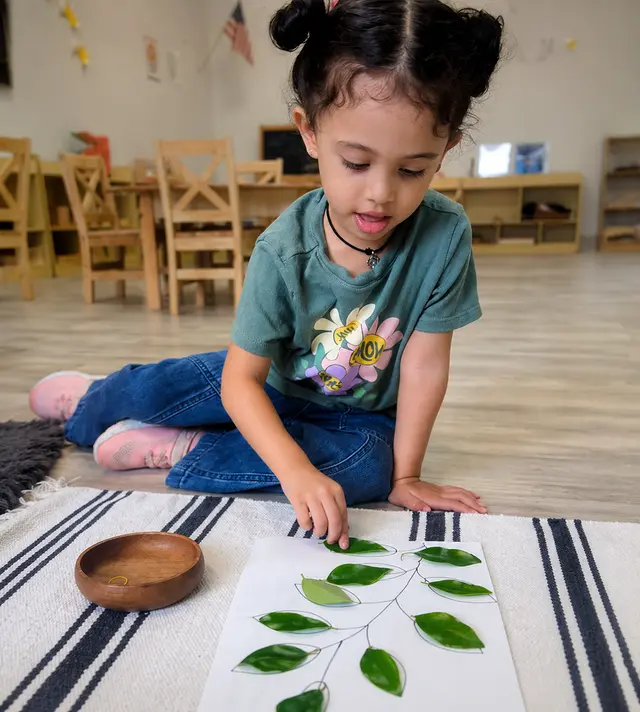
Teachers work at eye level and follow the child's lead. If a child is ready for a challenge, we offer it. If a child needs more time with a material, we give that time. Lessons often happen in small groups or one-on-one. Spanish and music are woven in when children are most ready to learn them.
The rooms are set up so children can find what they need and put it back. Materials sit on open shelves at a child's height. The morning work cycle is long and uninterrupted, so focus has room to grow. Snack and outdoor time break the day gently. The pace follows the children, not the clock.
How we work with families
At pickup, teachers tell you what your child worked on that morning. Questions come up in the hallway, at the door, or in a scheduled conversation with administrative staff. Initial visits happen on weekday mornings, so you can see the uninterrupted work cycle yourself. You tour, then sit and observe a class.
Your first visit starts with a tour of the school. Then you sit and observe a class at work. Before you leave, you meet with administrative staff and ask anything you want. New parents can also meet others and connect with the community on social media.